
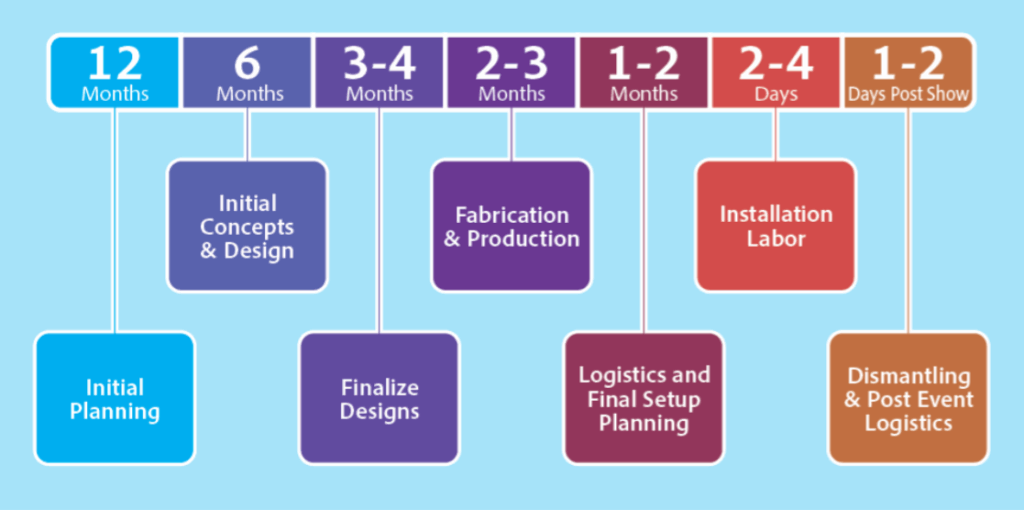
Anyone who has ever managed a trade show understands this truth: the booth design is usually not the part that derails a schedule. The real stress comes from the logistical details that quietly pile up behind the scenes. Successful trade show booth planning does not start with the graphics or the giveaway items. Instead, it starts weeks or even months earlier with a coordinated plan that eliminates surprises, delays, and unnecessary costs.
Long before your team arrives at the venue, dozens of operational tasks determine whether your on site experience feels polished or chaotic. Missing even one deadline can trigger unexpected fees, delayed freight, or technical issues that affect the quality of your booth. Below are the most commonly overlooked pre-show planning steps that influence the outcome of every event, along with practical guidance that will keep your team ahead of schedule.
1. Tracking Deadlines for Electrical, Rigging, and Booth Services
Trade shows often have multiple layers of deadlines for essential booth services. These include electrical drops, rigging support, booth labor, carpet, furniture and specialty equipment. What many teams do not realize is that service pricing shifts significantly based on the date you submit your order.
Early bird deadlines typically provide the deepest discount. Standard deadlines are more expensive. On site orders are the most costly and often include rush charges. Once you secure your booth, begin building a centralized deadline tracker that includes:
- Early bird pricing dates
- Standard pricing dates
- On site surcharge dates
- The required diagrams showing electrical locations, rigging points, and service placement
A simple calendar reminder can save hundreds or even thousands of dollars. Teams that are proactive with service orders also benefit from more scheduling flexibility, especially when complex rigging or heavy-duty electrical support is involved.
If you plan to print new booth graphics, large-format signage, or display elements, make sure to coordinate these deadlines with your print partner as well.
2. Ordering Drayage, Wi-Fi, and AV Support Early
Drayage, also known as material handling, is one of the most misunderstood elements of exhibiting. It refers to the cost of moving your freight from the loading dock to your booth and back again after the show. Placing drayage orders early helps you avoid long wait times and allows you to secure labor more efficiently. Late orders often result in reduced time windows and limited visibility into when your freight will arrive on the show floor.
Wi-Fi and AV support are equally important in modern exhibits. If your booth includes product demos, live presentations or streaming content, you will need reliable connectivity and AV equipment that meets your technical requirements. Many exhibitors assume that general venue Wi-Fi will work for their booth, but standard networks are often overloaded. Ordering dedicated Wi-Fi, hardline internet, monitors, speakers or projectors early ensures that everything is available and set up correctly.
When you create your trade show booth planning timeline, Wi-Fi and AV should be incorporated into the same master tracker as drayage and utilities. Any delay in ordering these items increases the risk of equipment shortages or slower response times from the venue’s technical teams.
3. Confirming Freight Labels, Carriers, and Arrival Targets
Your freight schedule drives the entire installation process. Every show has different delivery rules, such as advance warehouse options and direct-to-show site options. Each option has unique dates, costs, and handling procedures. Missing an arrival target is one of the fastest ways to jeopardize your booth setup.
Confirm the following before your materials leave your facility:
- Whether your shipment is going to the advance warehouse or direct to the venue
- The target move-in date assigned to your booth
- Proper labeling on all crates, pallets, and boxes
- Correct booth number, company name, and on-site contact information
- Carrier pickup windows and after-hours procedures
A five-minute audit of your shipping labels can prevent major issues upon arrival. If printed graphics or branded materials are part of your freight, ensure you coordinate with your production partner early.
4. Testing Demo Equipment and Packing Backups
A visually appealing booth can attract attendees, but the demo experience often determines whether a conversation becomes a real lead. Technical issues are one of the most preventable problems, yet they routinely disrupt exhibitor experiences.
Schedule a full equipment test 7 to 10 days before your shipment leaves. Test every device, including laptops, tablets, lighting, specialty hardware, and product displays. Confirm that login credentials, software licenses, power requirements, and adapters are all in working order.
In addition, pack essential backups such as:
- Spare cables
- Duplicate adapters
- Portable chargers
- Replacement devices
- A printed or digital troubleshooting guide
Assume that something will inevitably fail during the event. Backup equipment and clear documentation ensure your team can keep demos running without losing valuable booth traffic.
5. Aligning Booth Staff on Messaging, Scripts, and KPIs
Booth staff represent your brand during the highest concentration of face-to-face marketing you will have all year. Even experienced staff members benefit from alignment before stepping onto the trade show floor. Effective trade show booth planning involves clear communication about what your team needs to accomplish and how success will be measured.
Hold a pre show alignment meeting that covers:
- Your core value proposition
- Key product or service messaging
- Ideal customer profiles
- Standard conversation openers
- Lead qualification criteria
- Daily goals and overall event KPIs
A prepared and unified team delivers more consistent conversations, collects higher quality leads, and represents your brand with confidence.
6. Scheduling Meetings With Prospects Before the Show Begins
The most successful exhibitors do not wait for attendees to walk up to their booth. They create momentum before the show opens by scheduling pre-booked meetings with prospects, customers, partners and media contacts. This strategy increases your booth activity early in the event and signals to passersby that your booth is a popular destination.
Begin outreach three to four weeks before the event. Offer structured meeting times and promote any product demos or previews you plan to feature.
Make Trade Show Booth Planning Easier
Trade shows are won long before the show floor opens. The difference between a smooth, high-performing event and a stressful one often comes down to planning, production, and execution.
Production Resources helps marketing teams simplify trade show booth planning by managing the print, graphics, signage, and promotional materials that support your booth. From large-format displays to branded giveaways, our team ensures your materials are produced accurately, delivered on time, and ready when you need them.
If you are preparing for an upcoming event and want confidence that your booth materials will arrive on schedule and install without surprises, let’s talk.
Contact Production Resources today to start planning your next trade show with clarity and control.
Pre-Trade Show Booth Planning Frequently Asked Questions
When should I begin trade show booth planning?
Ideally, you should start planning as soon as you secure your booth space. Many exhibitors begin three to six months in advance, especially when new graphics, signage, or product demos are involved.
What is the difference between advance warehouse shipping and direct-to-show shipping?
Advance warehouse shipping delivers your materials to a third-party warehouse before the show. Your freight is then transported to the venue during the official move-in period. Direct-to-show shipping sends your freight directly to the venue, but it must arrive within strict time windows.
How early should I order electrical and rigging services?
As early as possible. Many shows offer discounted pricing for early bird orders. Waiting until you arrive on site often results in the highest price and the least scheduling flexibility.
Why is drayage so expensive?
Drayage involves labor, equipment and space to transport, store and return your freight. It is priced based on weight and handling complexity, so larger or heavier displays often include higher fees.
Who can help me print and manage materials for my trade show booth?
Production Resources Boston provides commercial printing, large-format graphics, promotional products and trade show materials. Their team acts as an extension of your marketing department and can support everything from design to production and fulfillment.